



Beer Brewing Equipment
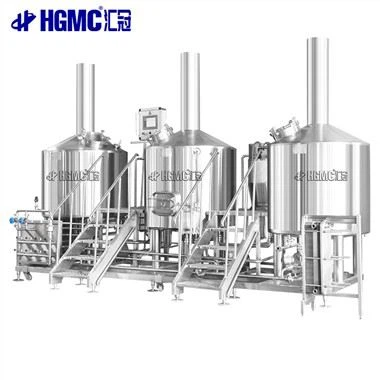
Beer brewing equipment mainly includes the following systems: raw material crushing system, saccharification system, wort cooling system, fermentation system, beer filtration system, bottle filling and gland sterilization system, refrigeration system and the like. HG Machinery is one of the professional beer brewing equipment manufacturers in China. Welcome to buy beer brewing equipment for sale at competitive price here. Be free to check price with us!
Beer brewing equipment and pipeline layout should be beautiful, easy to operate and safe; the pipes between brewing equipments should be connected by sanitary-grade quick-connect, which is easy to disassemble, assemble and move. It has the advantages of convenient cleaning, acid and alkali resistance, high temperature resistance, health and safety.
Beer brewing equipment has high precision requirements for test data, and has the advantages of convenient centralized management, discrete control, strong anti-interference, high reliability, and can be connected with various PLCs and remote computers. The beer brewing equipment is inexpensive, simple to operate, which is an ideal choice for restaurants, bars and beer lovers!
Features:
● The fermentation system mainly includes fermenter, sake tank and yeast expansion equipment. The tank body layer is made of Miller plate and cooling belt.
● The beer brewing equipment is convenient for manual operation and manual cleaning to further ferment high-quality beer and wine. It has international advanced fermentation engineering technology and equipment manufacturing. It can realize automatic or semi-automatic control through PLC automatic control system.
● Fermentation tanks are available in a variety of styles, and can be tailored to your needs. The equipment tank is welded with international standard food grade stainless steel to ensure the insulation effect of the tank.
● Adopt international beer standardized fermentation production technology, mirror polishing inside the tank, fully meet the requirements of beer fermentation, PLC automatic cleaning and disinfection system.
● The fermenter cooling jacket meets the technical requirements, and adopts the jacket heat exchange mode such as Maitreya plate, arched channel and spiral to meet the heat exchange technology requirements of different cooling media and pressure.
● The washing and sterilizing pipeline, the material pipeline and the cooling return pipeline are connected between the fermenting tanks. All stainless steel pipes in contact with the material are polished on the inner and outer walls to meet food-grade hygiene standards.
What Is Beer Brewing Equipment
Beer brewing equipment is a set of tools, machines and vessels used in the process of making beer. It includes items such as mash tuns, kettles, fermenters, bottling systems, kegs, pumps, hoses, filters, and more. The equipment is designed to perform various stages of the brewing process, including mashing, boiling, fermenting, conditioning, carbonating, and packaging. Beer brewing equipment can be used at home by hobbyists or by commercial breweries to produce large quantities of beer for distribution.




Benefits of Beer Brewing Equipment
Quality control
With beer brewing equipment, you have complete control over the entire brewing process. This means that you can ensure the quality of the beer by controlling the temperature, volume, ingredients, and brewing time.
Customization
With the help of beer brewing equipment, you can create customized beers according to your preferences, taste, and style. You can experiment with different ingredients, flavors and aroma to create a unique taste of beer.
Cost savings
Brewing your beer using beer brewing equipment is cost-effective in the long run. This is because the cost of buying beer from a store is way higher than the cost of brewing beer. Also, brewing at home gives you the flexibility to make as much beer as you need.
Easy to use
With the help of beer brewing equipment, home brewing has become a simple and easy process. It requires no special skills or training, and the entire brewing process can be completed within a few hours.
Health benefits
Home-brewed beer is devoid of many additives and preservatives found in commercial beers. This means that the beer is healthier and less harmful to your body than the commercially brewed beer.
Increased creativity
Beer brewing equipment offers you unlimited opportunities to experiment with different flavors, ingredients, and brewing styles. This means that you can bring out your creativity and brew several unique beers that have never been tasted before.
Why Choose Us
High quality
Our products are manufactured or executed to very high standards, using the finest materials and manufacturing processes.
Professional team
Our professional team collaborate and communicate effectively with one another, and are committed to delivering high-quality results. They are capable of handling complex challenges and projects that require their specialized expertise and experience.
One-stop solution
We can offer a range of services, from consultation and advice to product design and delivery. It is a convenience for the customers, as they can get all the help they need in one place.
Customized services
We understand that each customer has unique manufacturing needs. That’s why we offer customization options to cater to your specific requirements.
Quality control
We have built a professional QC team to accurately inspect every raw material and every process of production.
24H online service
We try and respond to all concerns within 24 hours and our teams are always at your disposal in case of any emergencies.
Material of Beer Brewing Equipment
Stainless steel
Stainless steel is the most popular material used in beer brewing equipment due to its durability, ease of cleaning and maintenance, and resistance to rust and corrosion. It also has the added benefit of being non-reactive with the beer.
Copper
Copper has been traditionally used in beer brewing due to its excellent heat conductivity and ability to remove sulfites from the beer. However, it is expensive and requires more maintenance than stainless steel.
Aluminum
Aluminum is a lightweight and inexpensive material but is not commonly used in beer brewing equipment due to its reactivity with acidic substances like beer.
Plastic
Plastic is often used for small-scale brewing equipment due to its low cost and ease of use. However, it can be prone to scratching and harboring bacteria if not properly cleaned.
Glass
Glass is used for fermenting beer or as a vessel for bottling the beer. It is non-reactive and easy to clean, but is fragile and can break easily.
Beer brewing equipment is equipment used to produce beer. It is mainly used in beer production, beer factories, bars and other places. Beer brewing equipment can provide a controllable production environment, convenient production management, diversified beer varieties and stable product quality in places such as beer factories and bars. In bars, the use of beer brewing equipment can realize small-batch beer brewing and meet consumer demand for customized beer.

Process of Beer Brewing Equipment

Preparation of ingredients
Beer brewing equipment is used to prepare the ingredients needed for brewing beer. These include malt, hops, yeast, and water. The equipment grinds the malt, measures the hops, and regulates the temperature and pH of the water.
Wort production
Wort is the sweet liquid that is extracted from malt during the brewing process. Beer brewing equipment is used to boil the wort, adding hops and other flavorings. The equipment also regulates the temperature and pressure during the boiling process.
Fermentation
Beer brewing equipment is used to ferment the wort into beer. Yeast is added to the wort, and the mixture is left to ferment for several days. The equipment regulates the temperature and humidity during the fermentation process.
Filtering and packaging
After fermentation, the beer is filtered to remove any remaining yeast or sediment. Beer brewing equipment is used to filter the beer, and then package it into bottles or cans. The equipment also regulates the pressure and temperature during the packaging process.
Quality control
Beer brewing equipment is used to test the quality of the beer. Various tests are performed to ensure that the beer meets the required standards for taste, aroma, and alcohol content. The equipment is also used to detect any contaminations or defects in the beer.

Components of Beer Brewing Equipment


Mash tun
The mash tun is typically a large vessel with a false bottom or a perforated plate to separate the liquid from the solid grain. After mashing, the liquid (called wort) is then transferred to the brew kettle, where it is boiled with hops and other flavorings before being cooled and fermented. The grain husks and other solids left in the mash tun are commonly known as the spent grains, which can be used as animal feed or in baking.
Brew kettle
The brew kettle is an essential piece of equipment in the beer brewing process. It is typically made of stainless steel, but can also be made of copper or other materials. A lid fits snugly onto the top of the kettle to allow for easy access and control of the boiling process.
Fermenter
The fermenter must be airtight to prevent oxygen from entering the fermenting beer, which can cause off-flavors and aromas. During fermentation, the yeast consumes the sugars in the wort and produces alcohol and carbon dioxide. The fermenter is equipped with an airlock, which allows carbon dioxide to escape but prevents oxygen from entering. Once fermentation is complete, the beer is typically transferred to another vessel for conditioning and carbonation.
Yeast propagation equipment
Yeast propagation equipment is used to propagate and control yeast growth, which is necessary for fermentation.Processes in beer, wine, bread, and other food and beverage industries. This equipment includes specialized vessels such as conical fermenters, yeast brink tanks, and propagation systems.
Cooling and chilling equipment
Cooling and chilling equipment is used to cool the wort after it has boiled, and to chill it to the appropriate temperature for fermentation.Plate heat exchangers are the most commonly used type of cooling equipment in breweries.
Storage tanks
These tanks are typically made of stainless steel or sometimes aluminum and can range in size from a few hundred liters up to tens of thousands of liters. The tanks are designed to be airtight, so that carbon dioxide produced during fermentation can be captured and used to carbonate the beer later on.
Filtration equipment
Filtration equipment is used to remove particles and yeast from the beer before packaging.Filtration equipment can vary in size and capacity, depending on the brewery's production needs. However, it's imperative to ensure that the filtration process doesn't strip the beer of its flavor and aroma. Thus, breweries must carefully select the filter media and equipment that best suit their beer style, recipe, and processing needs.
Bottling and canning equipment
Bottling and canning equipment is used to package the beer into bottles or cans for distribution.This equipment includes filling machines, cappers, labellers, pasteurizers, and packaging conveyors. Filling machines are used to fill the bottles or cans with beer, while cappers are used to seal the packaging. Labellers are used to apply labels to the packaging, and pasteurizers are used to ensure the beer is free from any bacteria or yeast that may cause spoilage.
Quality controlequipment
Quality control equipment is used to test and analyze the beer to ensure that it meets quality standards.By using these quality control equipment, brewers can ensure that their beer is consistent in flavor, aroma, appearance, and safety. This helps to maintain customer satisfaction, brand reputation, and compliance with regulatory requirements.
Cleaning equipment
Cleaning equipment is used to clean and sanitize brewing equipment to prevent contamination and ensure the quality and safety of the beer.Cleaning equipment is an essential part of the brewing process, and it is important to ensure that the equipment is well maintained and cleaned regularly to prevent contamination and ensure the quality and safety of the beer.
Maintenance Tips for Beer Brewing Equipment
Cleanliness
Keep your equipment clean. Dirty equipment can lead to bacteria growth and contamination of your beer. Clean after each use with soap and hot water or a specialized cleaner.
Storage
Store your equipment in a dry, cool place. Moisture can lead to rust and mold growth, which can damage your equipment and contaminate your beer.
Routine maintenance
Regularly inspect your equipment and perform routine maintenance. This may include lubrication of moving parts, checking gauges or thermometers, and replacing worn or damaged parts.
Check for damage
Before each use, check your equipment for any damage or wear and tear. Any cracks or leaks should be repaired before use.
Proper use
Follow the manufacturer’ s instructions for use of your equipment. Improper use or handling can damage your equipment.
Replacement parts
Keep extra replacement parts on hand, such as gaskets or seals, in case of wear and tear or other damage.
Sanitation
Sanitize your equipment before each use. Use sanitizing solution or boiling water to ensure that your equipment is free of bacteria.
Proper storage of ingredients
Properly store your brewing ingredients, such as malt and hops, to prevent contamination and spoilage.
Sanitation is one of the most important aspects of successful home beer brewing. Without proper cleaning and sanitization of all equipment that comes into contact with your wort and beer, you risk introducing unwanted microorganisms that can negatively impact the quality and flavor of your beer. Many common infections that ruin beer can be avoided with diligent sanitizing practices. The key to sanitation is eliminating all pathogens and microbes that could contaminate your beer. Standard cleaning removes debris and residues, but it does not kill or remove all microorganisms. Sanitizers are chemicals designed to eliminate these microbes through disinfection. Common sanitizers used in homebrewing include starsan, iodophor, and bleach. When used correctly, they will sanitize surfaces and kill any bacteria, yeasts, or molds that cleaning alone missed. All equipment that will contact the wort or beer must be sanitized, including fermenters, buckets, bottles, tubing, siphon hoses, airlocks, bottle caps, and kegs. Even spoons, thermometers, and other accessories should be sanitized. Take extra care with surfaces and holes that are difficult to fully clean, like tube connectors or valves. Proper sanitation requires full immersion or rinsing to ensure total coverage. It's also important to allow sanitized surfaces to fully dry before use to avoid contaminating your beer. Without sanitization, unwanted microorganisms picked up during the brew day could begin fermenting in the beer, producing off-flavors or potentially exploding bottles. Common contaminants include acetic acid bacteria which cause acidification and vinegary flavors, lactic acid bacteria which cause souring, and wild yeast which can attenuate a beer too far or introduce wild fermentation characteristics. Sanitizers eliminate these risks by deactivating any residual microbes that cleaning alone missed. Even with careful cleaning and rinsing, mold or infection could develop over time in dirty equipment, posing sanitation issues down the road. Regular sanitization is important for rebuilding culture and maintaining a clean home brewery environment. It helps avoid transporting microbes between brews and lowers the risk of infected batches. Proper beer sanitation requires vigilance but produces huge dividends in the quality and enjoyment of home-brewed beer. With some basic sanitizing habits, homebrewers can avoid many common off-flavors and ensure their equipment remains pristine for producing great beer.
Can I Reuse Yeast from a Previous Beer Brewing Equipment Brew
When you're brewing beer at home, one way to save money and brew more efficiently is to reuse yeast from a previous batch. Yeast is a living microorganism that carries out fermentation, converting sugars into alcohol and carbon dioxide. After fermentation is complete, there is still viable yeast remaining in the sediment at the bottom of the fermenter. With proper handling and storage, this yeast can be reused for several successive batches. The first step is to carefully siphon the beer off the yeast sediment after fermentation is finished. Leave at least an inch or two of liquid on the sediment so it remains hydrated. Some homebrewers will agitate the sediment to break it up and collect it in a sanitized jar or container. Proper sanitation is essential here to avoid contaminating the yeast. Sterilize all equipment that will come into contact with the yeast. Store the yeast container in the refrigerator for up to a month or the freezer for several months. When you're ready for your next brew day, simply take the container of yeast sediment out of storage. Allow it to warm to room temperature before pitching directly into fresh wort. The cold temperatures allow the yeast to go dormant but remain viable. Reusing yeast has some advantages over always using fresh yeast packets or cultures. It reduces the overall cost of homebrewing since yeast is one of the larger expenses. Reusing sediment also utilizes the full fermenting potential of the original yeast batch rather than dumping it after each use. The reused yeast may potentially provide consistency from batch to batch since the same strain is being repitched. With careful handling and monitoring of the beer quality, homebrewers can typically reuse yeast three to five times before considering refreshing the culture with a new package of that strain. Reusing yeast provides an efficient way to cut costs and fully utilize resources when homebrewing. Just be sure to maintain strict sanitation.
How Long Does Beer Brewing Equipment Take to Brew Beer
Milling and mashing
This step involves grinding the grains and steeping them in hot water to extract the sugars. The milling and mashing process typically takes around 1 to 2 hours, depending on the type of grains used and the desired extract yield.
Boiling and hopping
In this step, the sweet wort is boiled with hops and other ingredients. The boiling process helps to concentrate the sugars and drive off volatile compounds. The hopping process adds flavor and aroma to the beer. Boiling and hopping typically takes around 1 to 2 hours, depending on the volume of wort being boiled and the specifics of the recipe.
Cooling and fermentation
After the boiling and hopping process is complete, the wort needs to be cooled quickly to prevent the growth of bacteria and then transferred to a fermentation vessel. This step typically takes around 1 to 2 hours as well. Fermentation is the process where the yeast converts the sugars in the wort into alcohol and carbon dioxide. The fermentation process can take anywhere from a few days to several weeks, depending on the type of yeast used and the desired fermentation profile.
Maturation and carbonation
After fermentation is complete, the beer undergoes a maturation process where it sits for a period of time to allow any residual yeast and other particles to settle out. Maturation can take anywhere from a few weeks to several months, depending on the type of beer and specific aging requirements. Finally, carbonation is added to the beer, either through forced carbonation or natural fermentation, to achieve the desired level of carbonation. This process can take a few days to a week, depending on the method used.
Can I Brew Beer Without a Beer Brewing Equipment Kit
Yes, you can brew beer without a beer brewing equipment kit. In fact, the earliest versions of beer were brewed using basic tools and ingredients found around the home. However, using a beer brewing equipment kit can make the process easier and more efficient, while also ensuring better results. Grain is the main source of sugar for the yeast to convert into alcohol. You can use malted barley, or for a more intense flavor, you can try using other grains like rye, wheat, or oats. Hops are added to the wort during the boiling process to add bitterness and flavor to the beer. You can buy hops in pellet or whole form. Yeast is added to the wort during fermentation to convert the sugars into alcohol and carbon dioxide. You can use either fresh or dry yeast. Filtered or spring water is best for brewing beer. Make sure to use water that is free of chlorine or other impurities. Malt extract is a concentrated form of malt that provides the sugar for fermentation. It comes in either liquid or dry form. A large glass jar with a lid is needed to ferment the beer. Make sure the jar is clean and sterile before use. You will need empty bottles for carbonating and storing the beer. Make sure to clean and sterilize the bottles before use. Once you have gathered the ingredients and equipment, you can follow these basic steps to brew beer without a beer brewing equipment kit. Boil the water and malt extract in a large pot on the stove, stirring frequently to prevent burning. Add the hops according to the recipe and boil for a specified time. Remove from heat and strain the wort into the fermentation jar, being careful to avoid any contamination. Cool the wort quickly by placing the fermentation jar in an ice bath or by using a wort chiller (if available). Once the wort has cooled to room temperature, add the yeast and stir gently. Cover the fermentation jar with a lid and store in a cool, dark place for the specified fermentation time (usually a few days to a week). Once fermentation is complete, siphon the beer into the sterilized bottles, leaving enough space at the top for carbonation. Seal the bottles with caps and store in a cool, dark place for a few days or weeks, depending on the type of beer and carbonation level desired.
Our factory
Shandong HG Machinery Co., Ltd is located in Jiyang District, Jinan, China. Shandong HG Machinery Co., Ltd. owns more than 10000 m2 workhouse and more than 20 experienced technicians


Certificate

FAQ